
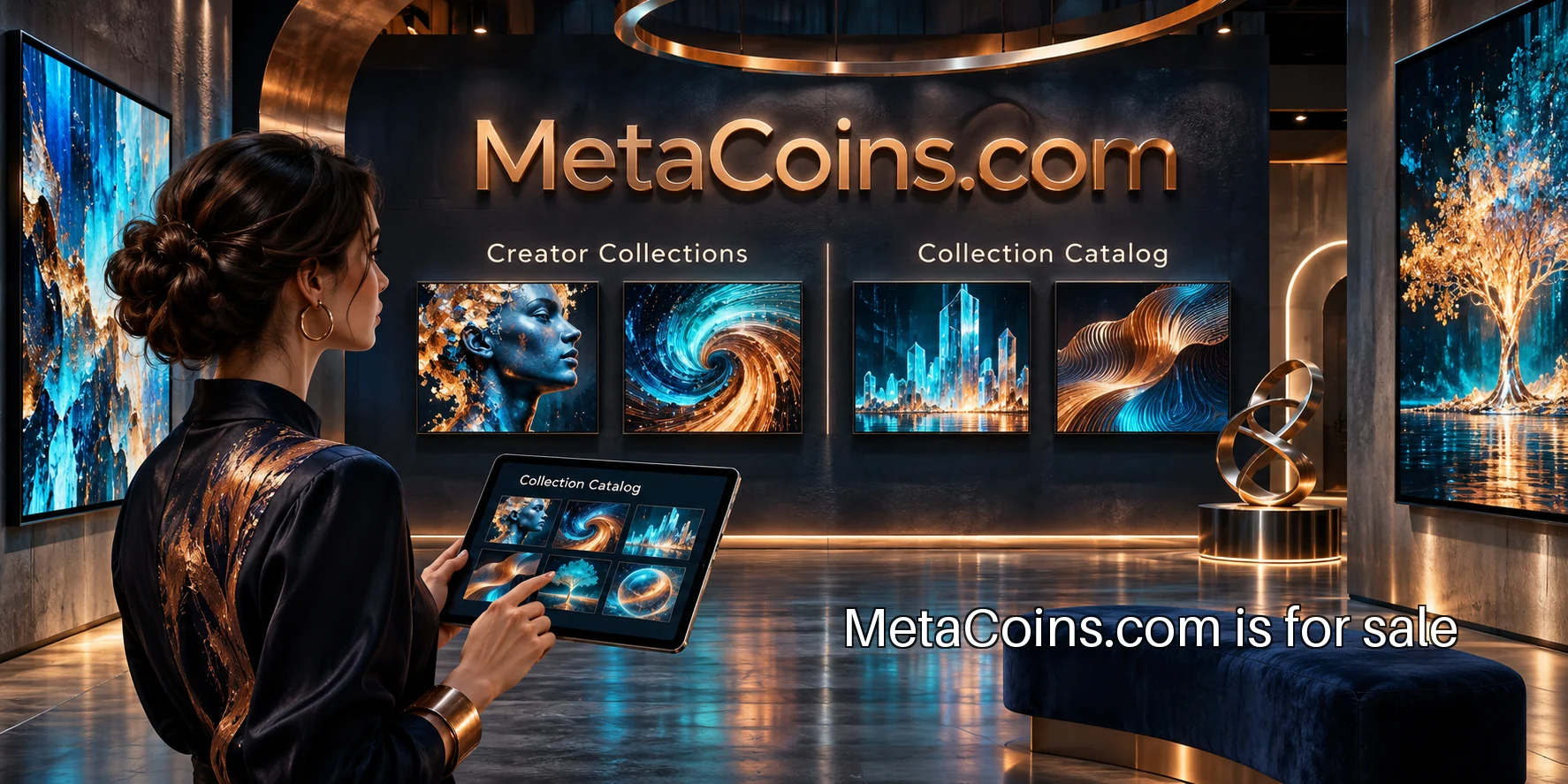
A digital collection can have a rich history that is difficult to see from a thumbnail grid. A MetaCoins catalog could give creators and curators a place to document that history: who made the work, which version is being shown, where it has appeared and which records support the entry. The first customer could be an independent curator or creator who wants a coherent collection reference for an exhibition, a community archive or a body of work.
This is an illustrative catalog concept. Its first job would be description and discovery, with a record readers can cite. MetaCoins fits a founder interested in the wider meaning of digital value, including the creative context that makes a collection worth studying. The product could begin with one consenting creator's collection and a careful editorial standard, then grow through the quality of its records.
A collection page with an editorial point of view
The opening page could introduce the creator, the collection's theme and the period of work covered. Each item would have a stable identifier, title, creator credit, creation date when established, medium or file format and a concise description. A reader could move from an individual work to its place in the collection and from there to an exhibition or related interview. The catalog would make those relationships part of the reading experience.
The Dublin Core metadata vocabulary provides established terms for fields such as creator, identifier, rights and provenance. A small catalog can choose a limited set, document how it uses them and keep the public labels understandable. Starting with a clear schema makes later imports and exports easier to reason about.
Separate the record from the interpretation
One section of an entry could hold verified collection facts, while another carries a signed curatorial note. Readers should be able to tell which is which. If an exhibition date comes from the creator's archive, link that archive. If the curator sees a recurring visual theme, present it as interpretation with the curator's name. This makes the catalog useful to someone checking a detail as well as someone exploring the work.
Consider a fictional collection of twelve animated city scenes. The catalog might group them by location and record the duration, format and creator-approved preview for each work. A collection essay could discuss how light changes across the series. The item record would still retain its own identifier and source references, so a reader can cite the third animation without depending on the essay's current layout.
Permissions are an operating task
Before publishing media, the team would need a clear record of the permission or license for that use. Store the creator's attribution wording, the permitted preview, the relevant rights statement and the date it was checked. A visible link should let a reader inspect the source terms. A catalog entry and permission to reproduce a work are separate records; the workflow should keep both easy to find.
Where a creator has chosen an open license, the Creative Commons license descriptions can help the team identify the particular terms attached to the work. The catalog should record the exact license rather than replacing it with a generic “open” badge. A review step can verify that the preview, credit and link match the permissions the creator has actually granted.
A useful submission and correction process
The first submission form could ask for the creator's name, collection link, a contact route and the sources supporting the proposed entry. Curators would then review the material before publication. Keep the editorial record of who checked it and what remains unknown. An unknown date can be labeled as such; inventing a precise date makes the catalog harder to maintain and less useful as a reference.
A correction route belongs beside each entry. Someone should be able to point to a field, supply a source and explain the proposed change. The catalog could retain a short revision history for substantive edits, especially attribution or edition details. Creators can then correct their records, and researchers can follow substantive changes over time.
How the first audience could find it
A creator-led exhibition is a plausible first distribution setting. The catalog could supply a collection URL for the exhibition page, a small set of permitted previews and an accessible text companion. A curator's conversation with the creator could introduce the record to the community already interested in the work. The aim is to make one collection useful enough that people have a reason to return to it.
Possible paid work could include collection documentation, hosted catalogs for small exhibitions or a curator workspace for preparing records. Test the service with one collection before adding features for a much larger archive. Ask how the creator currently answers attribution questions, where source files live and which details get lost when work moves between platforms. Those answers can define the first useful package.
One collection, documented well
The first release needs a stable record format, permission tracking, accessible media previews, source links and a manageable review queue. Search can begin with creator, title and collection. A compact export would let the creator keep a copy of the catalog data. The founder can expand the schema after learning which relationships readers actually use, with the original records kept intact.
A founder interested in this direction can ask about acquiring MetaCoins.com and describe the collecting community they want to serve. One carefully documented creator collection could be the beginning of a broader cultural archive under the same name.